


Darren Chia, 35, is a management consultant earning $15,000 a month. He has $62,000 in his CPF Special Account and $60,000 in cash, and his mother, 62, has no income since she retired. In October 2026, a colleague tells him that a cash top-up before 31 December cuts next year's tax, and he wants to know whether the saving is worth locking the money away.
According to the Inland Revenue Authority of Singapore (IRAS), a top-up of up to $8,000 to a member's own Special or Retirement Account comes off chargeable income. A second $8,000 is allowed for top-ups to family members, and a top-up made by 31 December 2026 counts for Year of Assessment (YA) 2027.
Darren's top band is 15%, so an $8,000 top-up saves him $1,200. The sections below follow the relief caps, the tax saved, the interest the money earns and the withdrawal rules he weighs before deciding.
How Does The CPF Cash Top-Up Relief Work?
The relief comes under the CPF Retirement Sum Topping-Up Scheme. According to the Inland Revenue Authority of Singapore (IRAS) (checked 27 September 2026), a top-up made in a calendar year earns relief in the following Year of Assessment (YA). A top-up made by 31 December 2026 counts for YA 2027.
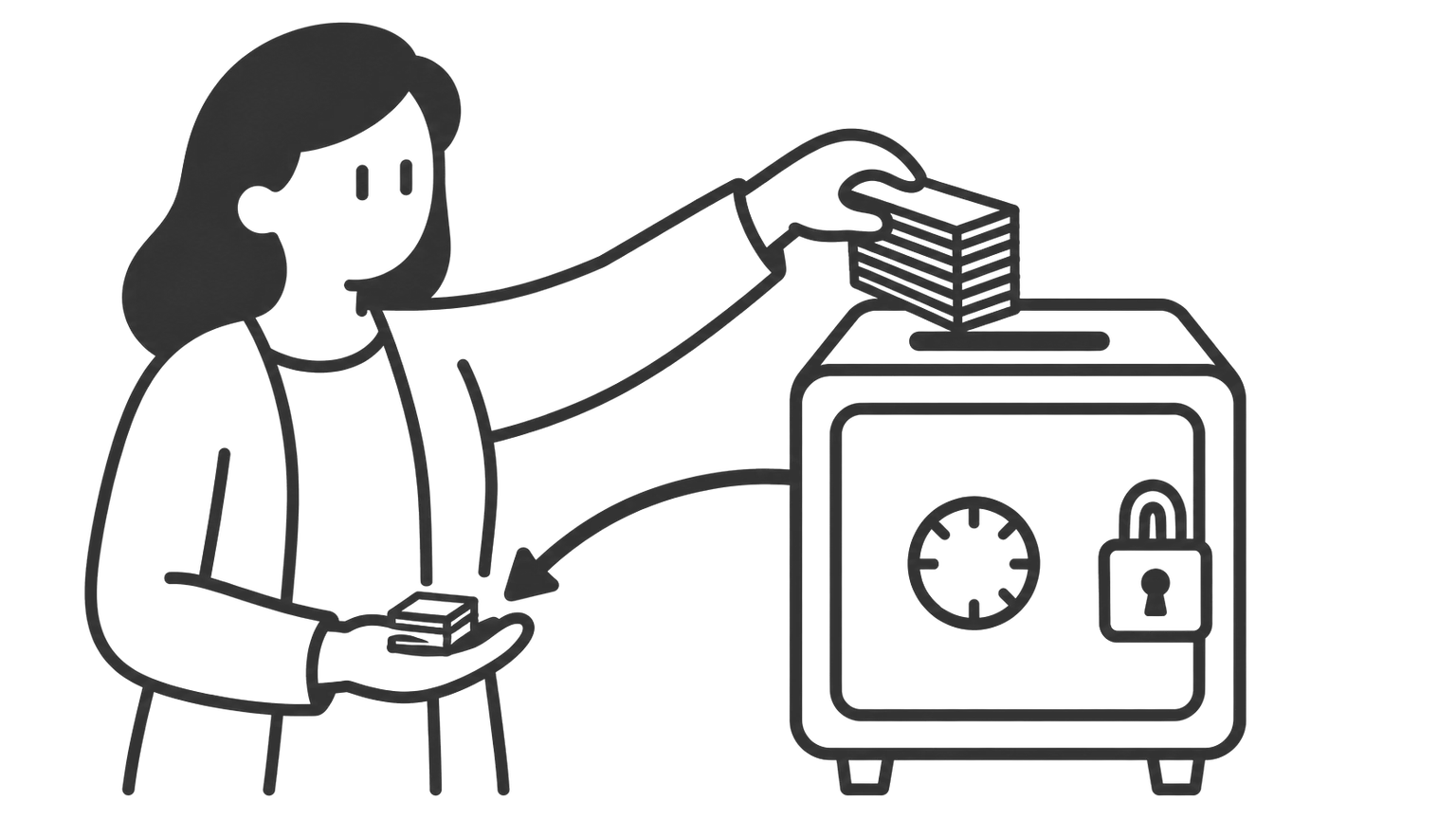
The giver must be a Singapore Citizen or Permanent Resident. The relief applies to cash top-ups only. Moving money from a member's own Ordinary Account to a Special or Retirement Account earns no relief.
| Recipient | Account | Maximum relief a year |
|---|---|---|
| Self | Special Account (below 55), Retirement Account (55 and above), MediSave | $8,000 |
| Parents, grandparents, spouse, siblings (and in-laws) | Special Account, Retirement Account, MediSave | $8,000 |
| Total | $16,000 |
Source: IRAS
Three limits apply:
- Family recipients must have earned no more than $8,000 in the year before the top-up. IRAS raised this income threshold from $4,000 from YA 2025.
- Top-ups that attract a matching grant under the Matched Retirement Savings Scheme earn no relief from YA 2026.
- MediSave top-ups that attract a Matched MediSave Scheme grant earn no relief from YA 2027.
Darren's mother earned nothing in 2025. A top-up to her Retirement Account therefore also qualifies, up to $8,000.
How Much Can He Top Up?
The relief is also limited by how much the recipient's account can take. IRAS caps a Special or Retirement Account top-up at the current year's Full Retirement Sum (FRS), less the savings already in the account. MediSave top-ups are capped at the Basic Healthcare Sum (BHS).
| Year of Assessment | Top-ups made in | Full Retirement Sum | Basic Healthcare Sum |
|---|---|---|---|
| YA 2026 | 2025 | $213,000 | $75,500 |
| YA 2027 (Darren) | 2026 | $220,400 | $79,000 |
Source: IRAS
Darren's $62,000 Special Account is well below the $220,400 FRS, and so is his mother's $150,000 Retirement Account. From 55, the CPF Board (checked 27 September 2026) lets members top up their Retirement Account to the Enhanced Retirement Sum of $440,800 in 2026. Only the part up to the FRS earns tax relief.
Read Also: BRS, FRS And ERS: What CPF Members Can Withdraw At 55 In 2026
How Much Tax Would A Top-Up Save Him?
A relief comes off the top of chargeable income, so it saves tax at the taxpayer's highest rate. The table below uses the resident tax rates that IRAS publishes for YA 2024 onwards (checked 27 September 2026). Chargeable income is income after all other reliefs, and the figures exclude any tax rebate.
| Chargeable income before top-up | Tax before top-up | Tax after $8,000 top-up | Tax saved on $8,000 | Tax saved on $16,000 |
|---|---|---|---|---|
| $40,000 | $550 | $270 | $280 | $470 |
| $60,000 | $1,950 | $1,390 | $560 | $1,120 |
| $80,000 | $3,350 | $2,790 | $560 | $1,120 |
| $100,000 | $5,650 | $4,730 | $920 | $1,840 |
| $120,000 | $7,950 | $7,030 | $920 | $1,840 |
| $160,000 (Darren) | $13,950 | $12,750 | $1,200 | $2,400 |
| $200,000 | $21,150 | $19,710 | $1,440 | $2,880 |
| $300,000 | $40,550 | $38,950 | $1,600 | $3,200 |
Source: IRAS
Darren's $180,000 salary, less $1,000 of earned income relief and $19,200 of CPF relief on his own contributions, leaves chargeable income of $159,800. All $16,000 of a full top-up falls in the 15% band, so it saves 15% × $8,000 = $1,200 for his own account and $2,400 with his mother's. At $40,000 of chargeable income, an $8,000 top-up stays inside the 3.5% band and saves $280, and a $16,000 top-up crosses into the 2% band, so it saves ($10,000 × 3.5%) + ($6,000 × 2%) = $350 + $120 = $470.
How The $80,000 Relief Cap Limits The Saving
IRAS applies a personal income tax relief cap of $80,000 a year to the total of all reliefs a taxpayer claims, and the top-up relief counts towards it. Darren's reliefs come to $20,200, so the cap does not reduce his relief.
His manager shows the other case. Her other reliefs already come to $76,000, so she gets relief on only $4,000 of an $8,000 top-up, and at a 15% top rate that saves $600. The cap mainly affects high earners who also claim SRS relief and large parent reliefs in the same year.
Read Also: Singapore Personal Tax Reliefs For YA 2026 And The $80,000 Cap
What Interest Would The Top-Up Earn?
The CPF Board (checked 27 September 2026) pays 4% a year on Special, MediSave and Retirement Account savings from 1 October to 31 December 2026. The Government has extended this 4% floor until 31 December 2027. Members also earn an extra 1% on the first $60,000 of their combined balances, with at most $20,000 of that from the Ordinary Account.
An $8,000 top-up earns about $320 in its first year at 4%. If the rate stays at 4%, the balance grows as follows.
| Years in CPF | Estimated balance at 4% a year |
|---|---|
| 1 | $8,320 |
| 10 | $11,842 |
| 20 | $17,529 |
| 30 | $25,947 |
Source: CPF Board
The relief is paid once, in one YA. The interest comes every year until the member draws the money as monthly payouts. For Darren, the $1,200 tax saving is smaller than the estimated $9,529 of interest over the 20 years until he turns 55.
When Can The Money Come Out?
The CPF Board describes top-ups as irreversible and reserved for monthly payouts in retirement, and no part can be taken out early at any cost. From 55, only savings above the Full Retirement Sum can be withdrawn, and top-ups to the Retirement Account go towards CPF LIFE payouts from 65.
An SRS contribution has the same 31 December deadline and a cap of $15,300 for citizens and permanent residents. SRS money can be withdrawn early, with the full amount taxable and a 5% penalty.
Read Also: SRS Or CPF Cash Top-Up: Which Cuts More Tax In 2026?
When Should He Make The Top-Up?
CPF computes interest monthly, so a top-up made on 30 December has earned almost nothing by the time the year closes. The CPF Board estimates that a top-up made in January instead of December can earn up to 20% more interest over 10 years. The relief is the same whether the top-up lands in January or December of the same year.
For the most accurate figure, taxpayers can work out the year's tax twice, once with the top-up and once without, and take the difference. The difference includes the effect of every band the top-up crosses and of the relief cap.
Read Also: Work Out Your Household's Income Tax And Reliefs In Cashmere Pocket
What Did Darren Decide?
Darren takes home $13,400 a month after $1,600 of employee CPF and spends $7,000, so his $60,000 in cash covers more than eight months of spending. In October he tops up $8,000 to his own Special Account and $8,000 to his mother's Retirement Account. The $16,000 saves him $2,400 in YA 2027, and he keeps $44,000 in cash.
A top-up suits CPF members who have money they will not need before 55 and who pay tax at 7% or more. At those rates, an $8,000 top-up saves $560 to $1,600 a year in tax and then earns at least 4% until the end of 2027. Money that may be needed for a home, a child's education or an emergency is better kept out of CPF, or put into SRS, where early withdrawal is possible at a cost, and the right amount depends on each household's income, other reliefs and cash needs.